Trump Praises Indian Economy, Criticises US Federal Reserve Over High Interest Rates
- International
- (Asia/Kolkata)
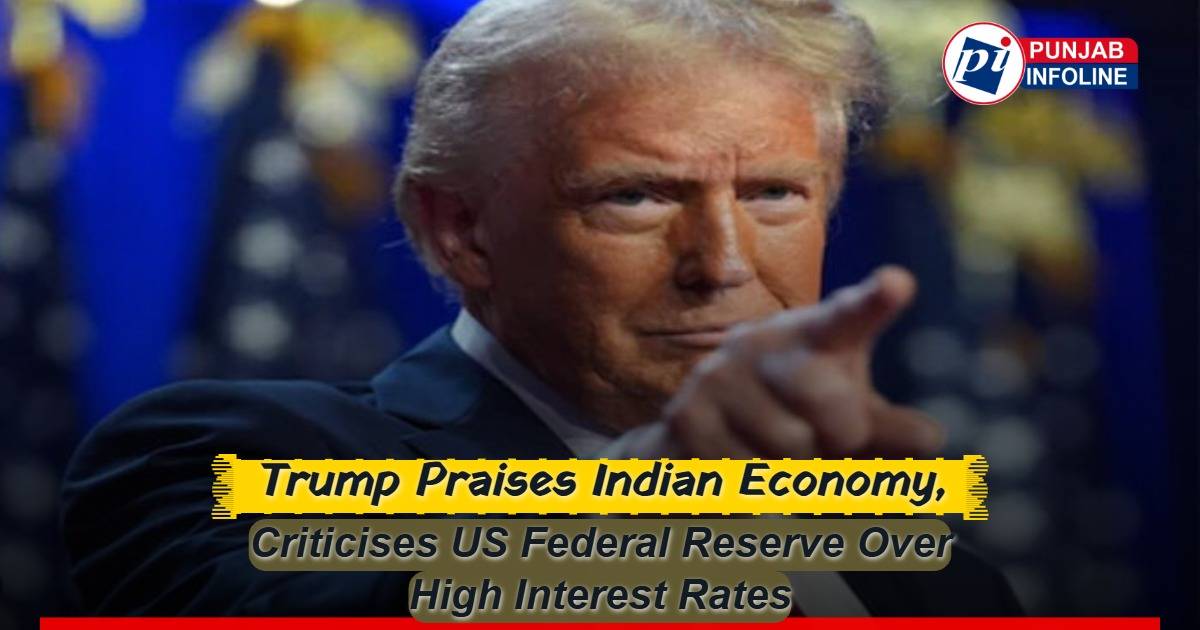
US President Donald Trump has praised India's economic performance, citing its 7 per cent GDP growth and lower interest rates set by the Reserve Bank of India (RBI), while criticising the US Federal Reserve for keeping borrowing costs high. Speaking on Friday (local time), Trump argued that the US economy could achieve growth of 15 to 20 per cent if interest rates were reduced.
Speaking to reporters at the White House, Trump accused the US Federal Reserve of being "too political". He said that whenever the United States announces strong economic figures, the central bank raises interest rates instead of lowering them to support further economic growth.
Trump said, "Interest rates are way too high because we have a very political Fed. I'm not blaming the chairman, but the fact is we have a very political Fed. Every time we announce good numbers, they raise interest rates. They do it for a reason. It should be the opposite."
Trump Cites India's 7% GDP Growth
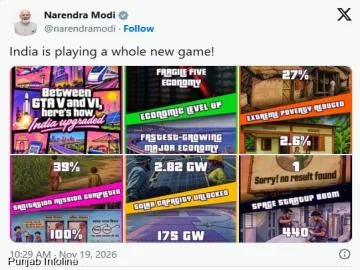
Comparing the US economy with India, Trump pointed to the country's lower interest rates and 7 per cent GDP growth. He suggested that if the United States adopted a similar approach, it could achieve significantly higher economic growth.
The US President said, "If you look at India, they have low interest rates, and they have 7 per cent GDP. We would have 14%, 15%, maybe 20% GDP. It's really sad when you do so well and then they (the Fed) raise the interest rate. The fact is, we've moved past that."
Trump further argued that the United States should have the lowest interest rates, citing its position in the global economy and its contribution to the economic success of other countries.
US Inflation Remains Above Federal Reserve's Target
Trump's remarks came amid his continued criticism of the Federal Reserve's monetary policy, at a time when US inflation remains significantly above the central bank's 2 per cent target.
According to the figures cited in his remarks, annual Personal Consumption Expenditures (PCE) inflation stood at 3.6 per cent in September, while core PCE inflation, which excludes food and energy prices, was recorded at 3.1 per cent.